

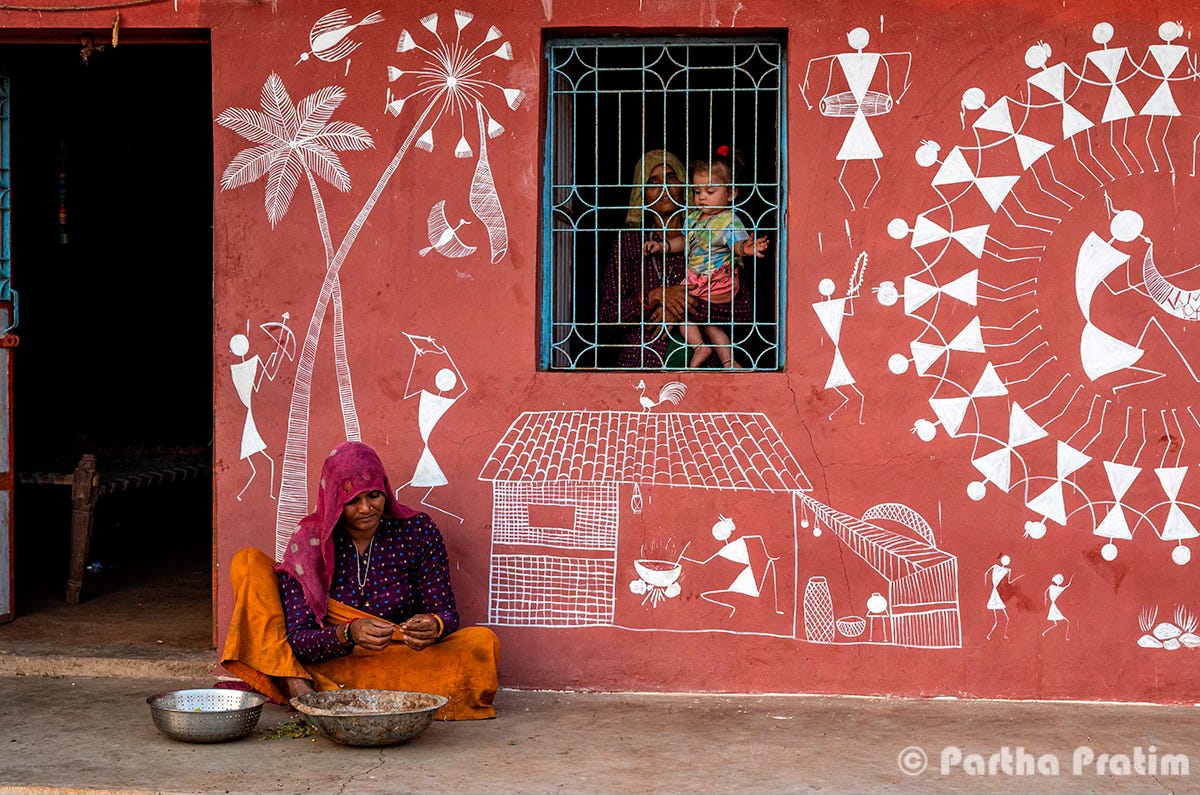
The National Crafts Museum & Hastkala Academy in Delhi is my go-to place when it rains. There are many reasons to love it: the palak patta chaat at Cafe Lota, a beautiful, earthy cafe that serves cuisines from across India, and the village complex that showcases rural architecture from across the country. There is also the Cultic Craft Gallery, which features sculptures, paintings, textiles, and other objects associated with the rituals of various religions in India, and a small flea market where I first learned to recognise the distinct styles of Gond, Warli, and Madhubani. For me, this museum is a quiet sanctuary far from the madding crowd.
Among all the traditional art forms I encountered in the flea market, Warli quickly became my favourite. Maybe it’s the familiarity of the human characters, or perhaps it’s a lingering memory of that iconic Coca-Cola campaign featuring Warli motifs.
Whatever the reason, the art’s powerful storytelling stands out and pulls me right in. That connection deepened when I met master Warli artist Mr Sanjay Parhad from Palghar, Maharashtra. Inspired by his work, I decided to collaborate with him, and you will soon find his pieces at Bohohaat.
Understanding the Warli Tribe
To understand Warli art, we first need to understand the Warli people. The Warli are an indigenous (Adivasi) tribe living across the Maharashtra-Gujarat border region, from the forests and hills of Thane and Palghar in Maharashtra to the Dharampur, Vansda, and Umbergaon talukas of Gujarat's Valsad district.
Culture here is passed down orally rather than in writing, most visibly through the dance and song that mark festivals, weddings and other communal occasions. The best example among these is the Tarpa dance, named for the long, cylindrical wind instrument that drives it, where dancers link hands and move in a continuous circular formation, a pattern that recurs often enough in Warli painting itself to count as a cultural signature.
Jivya Soma Mashe & Modern Warli Art
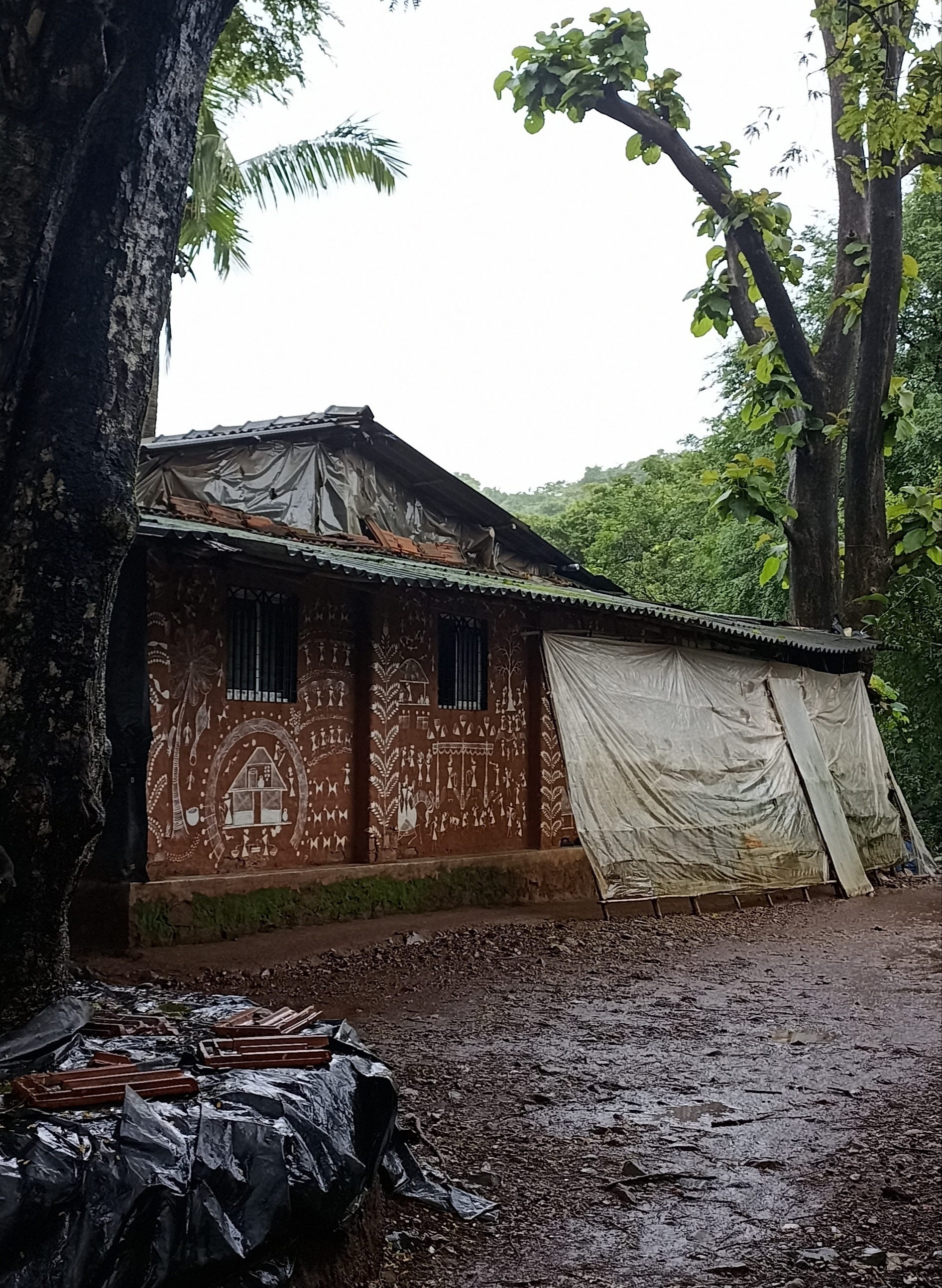
No discussion of Warli art is complete without Jivya Soma Mashe, the man who brought it to global prominence. Traditionally, Warli painting was a ritual art tied to events like weddings and harvests, practised almost exclusively by women until the late 1960s. Mashe revolutionised the tradition by painting on an everyday, non-ritual basis.
After losing his mother at a young age, Mashe stopped speaking for a time and communicated solely by drawing in the dust, a habit that gave him a unique status in his community and eventually caught the attention of government agents documenting the art form.
As his career progressed, Mashe received immense national and international recognition, including a prominent feature in the landmark “Magiciens de la Terre” exhibition at the Centre Pompidou.
His success inspired other young Warli men to take up painting commercially, shifting the practice from a largely female domestic domain into a broader commercial art form. Through it all, Mashe captured the philosophy animating his people, once summing it up simply:
“There are human beings, birds, animals, insects, and so on. Everything moves, day and night. Life is movement.”
Warli Art Characteristics
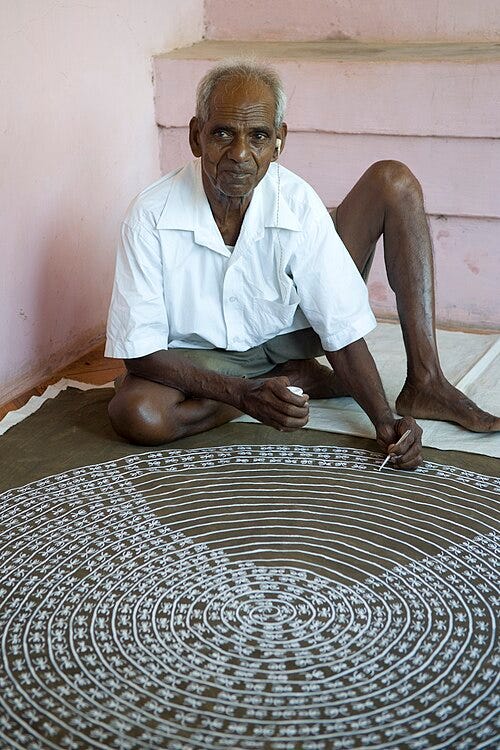
Warli painting uses natural materials, such as cow dung, mud, coal, indigo, and geru, mixed with glue for a solid base, and a chewed bamboo stick as a brush. However, Modern practice has shifted to acrylic/poster paints on handmade paper, moving away from the traditional mud-and-cow-dung canvas
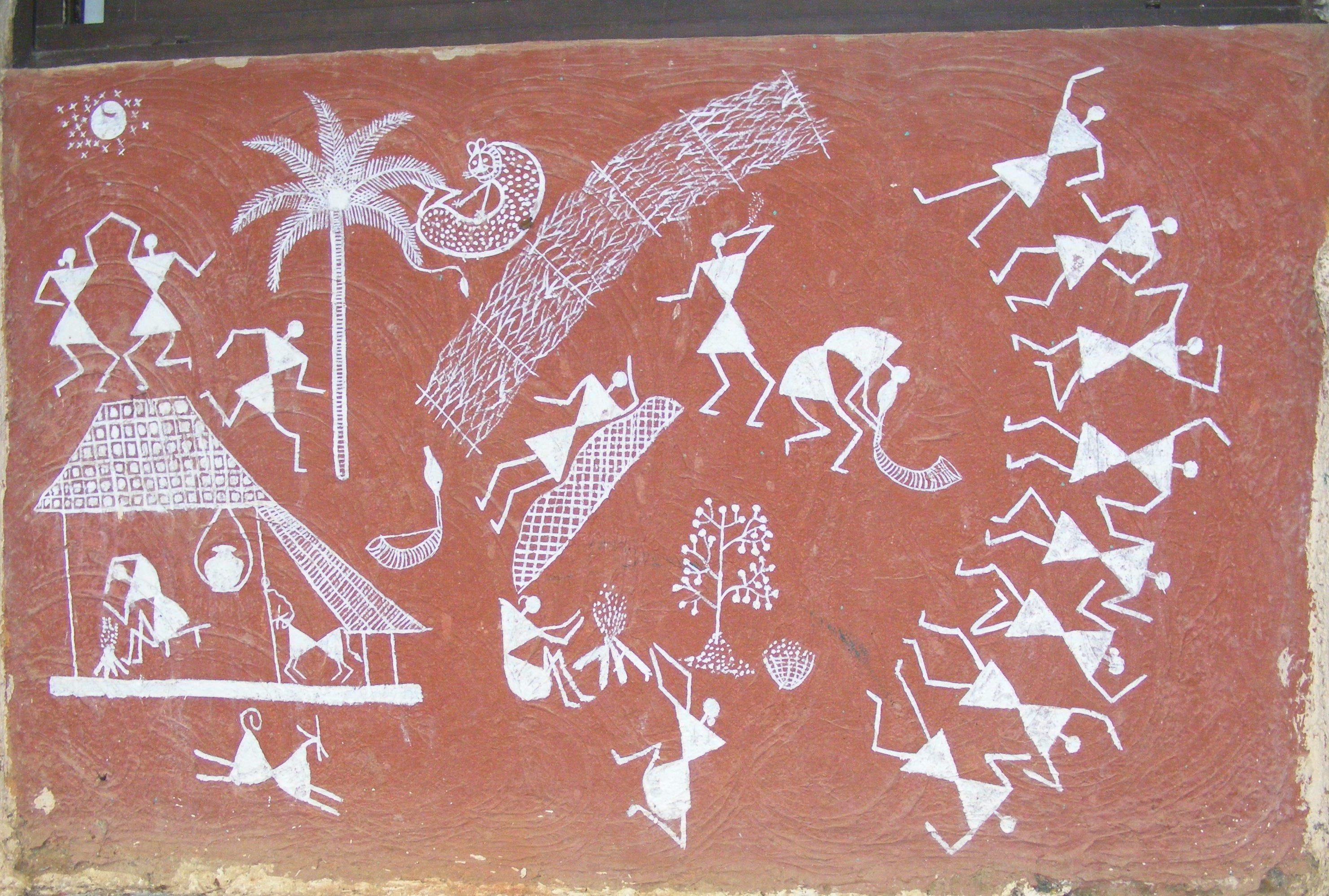
Another fascinating aspect of Warli art is its geometric shapes as a visual vocabulary, which makes it simple yet profound. Circles represent the sun, moon, and human heads/faces; triangles represent mountains, trees, and the human torso/pelvis; and Squares represent sacred enclosures.
The storytelling centres on everyday village life: farming, hunting, fishing, and dancing. Marriage rituals and processions are a recurring, significant theme in Warli art. Communal, celebratory scenes include the Tarpa dance.
There's a reason Warli art keeps pulling me back, past the flea market, past Sanjay's brushwork, past everything I've read about Mashe and his village. Maybe it's true what they say, that we're all refugees from our past in some way, carrying places we've left behind whether we mean to or not.
For me, that place is my own village, one I haven't set foot in for twenty years. Looking at a Warli painting, at its circles and stick figures caught mid-dance, does something strange to that distance. It doesn't erase it, but it makes the memory feel closer, like the past isn't quite as far away as the years suggest.