


Disclaimer: The views, folk traditions, and family histories expressed in these submissions are those of the contributors.
Now that the book is finished, I know that this was not a hallucination, a sort of professional malady, but the confirmation of something I already suspected—folktales are real.
― Italo Calvino, Italian Folktales
When we put out the call for Indian folktales, the overwhelming response reminded us just how vital it is to document these stories. Our rich heritage is built on a tradition of oral storytelling and folktales, carried across generations from mind to mind and heart to heart.
The Bride of Jejuri
Narrated by Avni Katakkar
The story focuses on Jejuri town, a historic temple town in the Pune district of Maharashtra, India, famous for the hilltop Khandoba Temple
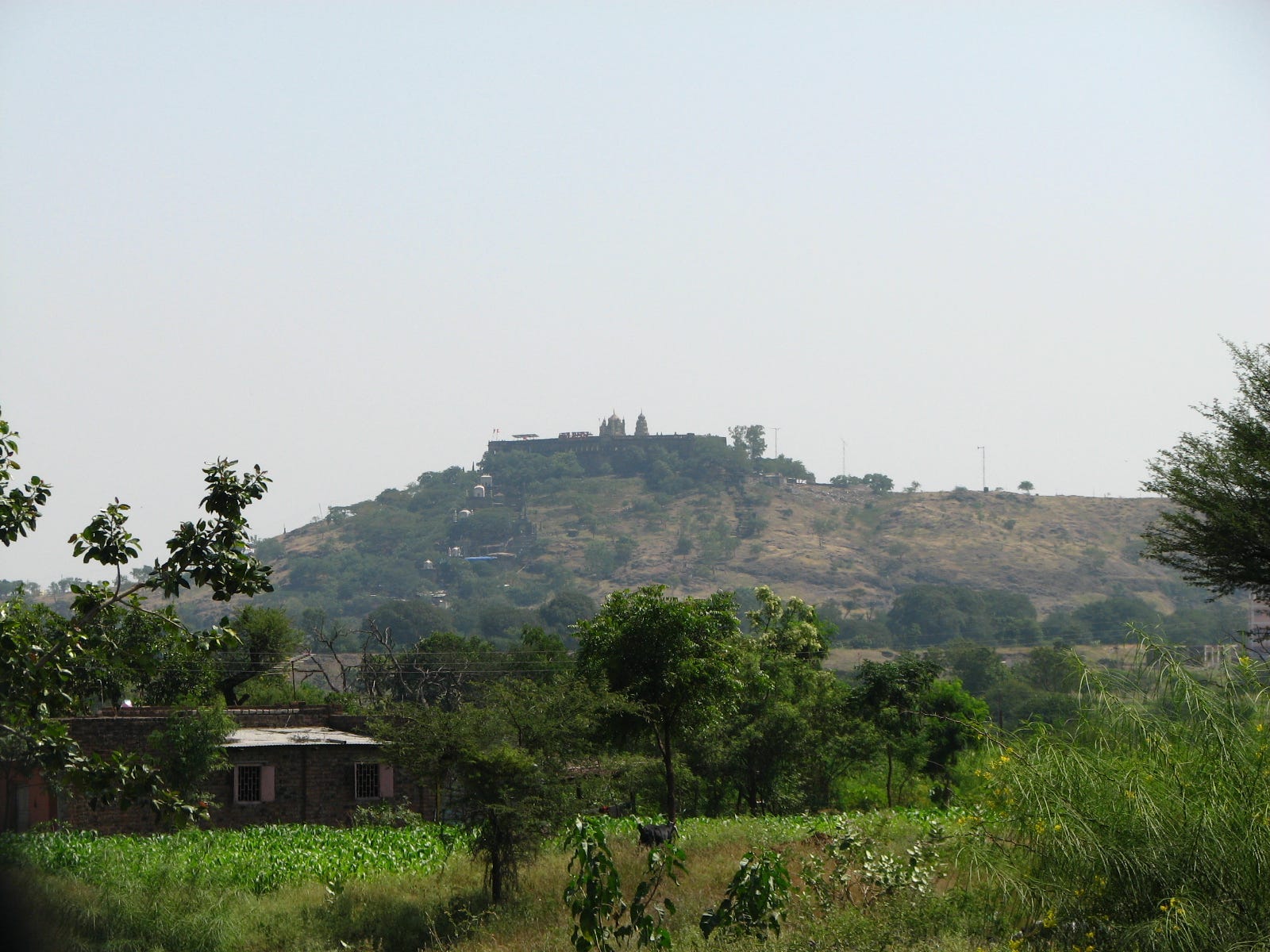
Long ago, in a village under Jejuri hill, there lived a woman called Kamli. Eleven years married, no child. Her mother-in-law had stopped mentioning it, which was worse than the shouting.
Every Sunday she climbed the steps to Khandoba’s temple, and that hill has a lot of steps. One Sunday, knees scraped, sari yellow with bhandara, she said it out loud to the stone, the way you’d bargain with a vegetable seller.
“Give me a girl. If you do, she’s yours. I mean it. Yours.” She did mean it, that day.
A girl was born the next winter. Sonabai. Fat cheeks, a temper, lungs like a bellows. She got into everything. She stole guavas, fought her cousin over a marble, and once climbed the neem behind the well and wouldn’t come down till her father promised jalebi. Kamli watched her and forgot the promise completely. So did everyone else. Khandoba, people say, forgets nothing, having nothing else to do.
Sonabai was eight when the rain didn’t come. Then the buffalo got a fever. Then Kamli’s brother-in-law lost his place at the sugar factory and sat all day on the verandah, chewing tobacco and staring at his hands. It was the old woman from the temple, the one who trimmed the wicks, who finally said what she’d been carrying in her mouth for weeks. “Somebody here owes something.” Kamli sat down on the floor where she stood.
They did it on a Thursday. There was haldi, so much that the water in the bucket turned orange, and Sonabai’s arms stayed yellow for days. Someone put a kavdi mala round her neck. A priest chanted. The dhol went on and on. The women clapped, all of them married, most of them tired, a few of them clapping with their eyes on their own feet.
Sonabai asked, “Where’s the groom?”
“In the mandir.”
“Which one is he?”
Her mother pointed at the stone.
She looked at it for a long time. It was a stone, grey, with oil on it.
The rain came back that year. People said the god was happy. Nobody asked who had paid for it.
After that she was Murali, and her name got smaller. Sonabai became Sona, then just Murali, or Ae, or worse. She lit the lamps at jatra and sang for Khandoba in a voice that got steadier every year. Men came to listen. Some stayed after. Some left money on the step, a few coins, sometimes a note. Her aai, who used to plait her hair, stopped meeting her eyes around the third year. Sonabai saw it happen. She didn’t say anything. She kept quiet for about nine years.
Then one full-moon night, when the hill was empty, she went up alone with a diya. She wasn’t going to pray. Something had been sitting in her chest for years, and it had finally found words.
“You are the king,” she told the stone. “Farmers get rain from you. Soldiers get courage. Even that dog of yours gets a place by your feet. What did I get?”
The flame leaned over. Nothing else happened. Then she heard scratching on the path behind her. A dog, thin, one ear torn, sitting there as if it had been sitting a long time. Some say it was Khandoba’s dog, the one that lapped up the demon’s blood when even the gods couldn’t. Others say a stray, that’s all.
People argue about this.
The Inverted Steps: What the Pichal Peri Taught Me About Staying
Narrated by Sudha Kerketta
The story focuses on the Pichal Peri, a legendary female spirit from South Asia, famous for having feet that point backwards.

When I was younger, summer vacation meant going to my grandmother’s place on the borders of Madhya Pradesh. The evenings there were different from the city. As soon as the sun went down, the electricity would cut out, and the whole village would turn pitch black. We would all gather on the porch around a single kerosene lamp. That is when the older cousins would lean in close and start whispering about the Pichal Peri.
My grandmother would always shout at us from the kitchen, threatening to hit us with her iron ladle if we didn’t stop talking about ghosts after 9 PM, but we never listened.
The cousins said she was a witch who lived in the deep forests where the sal trees grew too close together. They said if you were walking home alone on a muddy path after rain, you might hear the faint sound of silver anklets behind you. If you turned around, you would see a woman clothed in white. Her hair was impossibly long, falling forward over her head like a dark silk curtain so you could never see her eyes or her smile. But the elders always told us to look down. If you looked at the mud, you would see the terrifying truth: her toes pointed straight back toward the jungle, and her heels faced forward. She looked like she was walking away from you, but in reality, she was gliding rapidly toward you.
For years, that story kept me inside the house. I used to pull the heavy cotton quilt over my head, terrified of the woman whose body was twisted inside out.
But as I grew older, went through my own rough patches in life, and started working as an independent researcher and educator, that old campfire story came back to me. One afternoon, while I was looking at the children in my classroom, it hit me. The Pichal Peri isn’t a monster meant to scare children.
She is a tragedy.
Think about what it actually means to have your feet turned completely backward. It means your body is forced to face tomorrow, but your steps are permanently locked into yesterday. You want to run forward into the light, but your path keeps dragging you back into the dark woods you just escaped.
Boho Haat is an initiative by Bohemian Dialogue to celebrate the oral storytelling traditions, artistic memories, and disappearing textures of the Indian subcontinent. Bring a piece of this legacy home; explore the products by Indian artisans.