

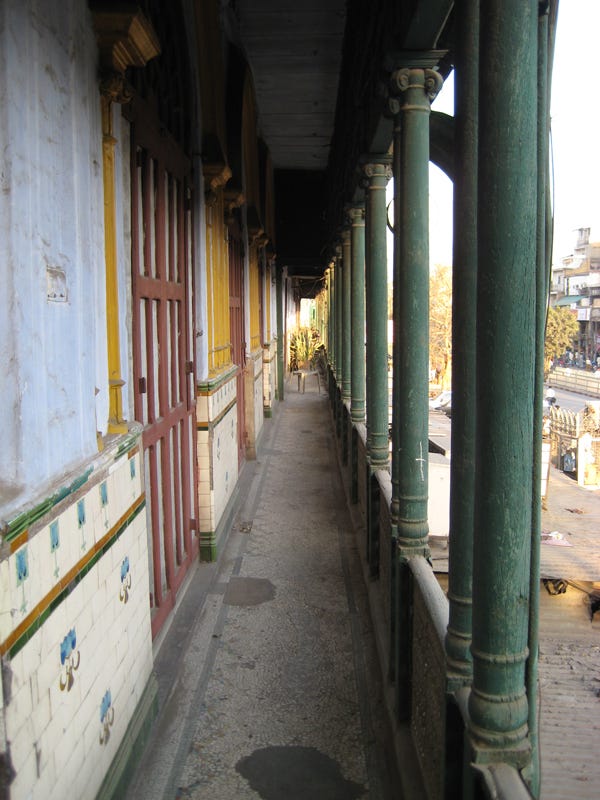
If you drive from Kashmiri Gate to Chandni Chowk, you'll catch glimpses of old-world charm along the way. Look above from your window, and you'll notice these are havelis from a bygone era. Sadly, much of that charm is fading or has already faded, as few people are willing to preserve them. A handful, however, have made the effort — and I visited some of these restored havelis myself. And while siting on one of the roof from one of the restored havelis, I saw flocks of Kites flying, like a scene painted from Ahmed Ali’s old delhi.
“The damage done by colonial powers to the heritage of conquered peoples is irreversible; yet racial memory is a collective storehouse that time and history cannot eradicate.”
― Ahmed Ali, Twilight in Delhi
And so, my heritage walk begins with the havelis that have recently been restored.
Havelis on This Walk
Haveli Dharampura
I remember first learning about this haveli during my college days. It has been a long time since then, but when I finally decided to begin my journey exploring Delhi, this place was the very first thing on my mind.
Tucked away in Gali Guliyan near Gate no 3 of Jama Masjid, the haveli was restored by BJP leader Vijay Goel. Its roots trace all the way back to the foundation of Shahjahanabad; its earliest residents were Mughal chieftains, followed later by the Jain community.
Learning about its lineage reminded me of Chandni Chowk: The Mughal City of Old Delhi, where Swapna Liddle describes how Shah Jahan envisioned the new city by inviting merchant communities, including Jains and Banias, to settle and build its commercial heart.


Kathika and Neem Haveli
Deep within the bustling lanes of Chawri Bazar lies another beautifully preserved gem: a museum-haveli that once belonged to Kashmiri Pandits. Perfectly capturing the essence of 1860 to 1900, the structure was thoughtfully revived by Mr. Atul Khanna, a heritage conservationist passionate about restoring India's grand history to its former glory.
Getting here wasn't easy. It took me two trips to Chawri Bazar and a long walk from where I had parked. But the moment I stepped into its hidden lanes, it felt worth every bit of the effort. Today, the restored haveli hosts Kathak performances, cultural events, and exhibitions, offering a glimpse of what Delhi's old havelis can become when they are thoughtfully preserved.


Havelis Beyond This Walk
Chunnamal Haveli
I really wanted to visit this haveli but couldn’t make it inside, despite having passed by it many times. It remains a private residence, with the family continuing to live here and carefully maintaining the building.
The story of its founder, Rai Chunnamal, is one of the most fascinating in Delhi’s history. After the Indian Rebellion of 1857, he became one of the wealthiest men in the city. The poet Mirza Ghalib specifically mentioned Rai Chunnamal by name while lamenting that men of humble origins were rising to wealth and influence as Delhi's old noble families were reduced to poverty.
Yet Rai Chunnamal is remembered for another reason. When the British auctioned Fatehpuri Masjid after 1857, expecting it to be demolished, he bought it for ₹19,000 but chose to preserve it instead. He kept the mosque intact until it could once again serve its original purpose, making him one of the more complex figures of nineteenth-century Delhi.
Mirza Ghalib ki Haveli
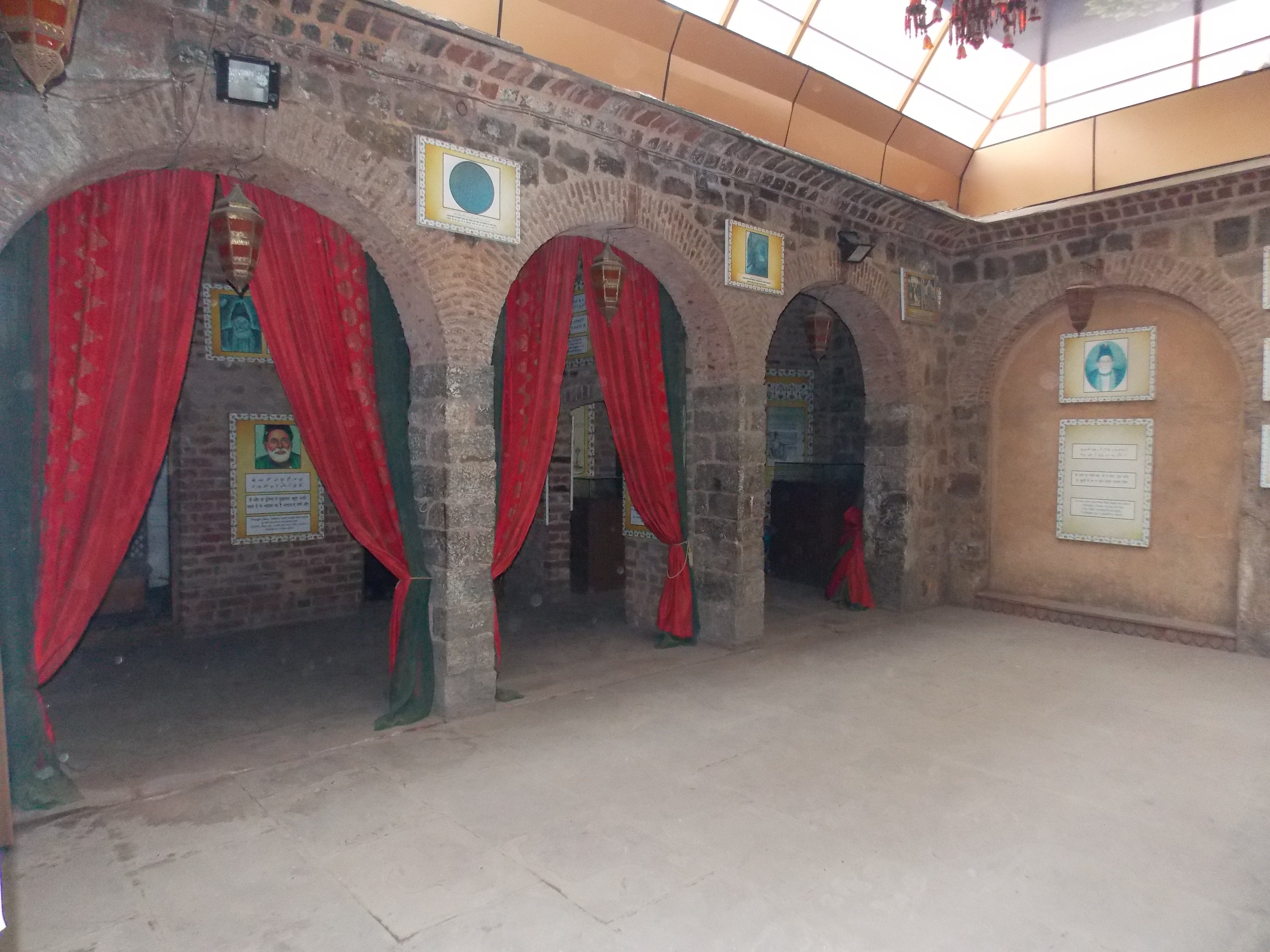
I last visited Ghalib Ki Haveli in 2019 while working on a project about the poet’s life. The idea for that project began the day I discovered that a well-preserved poet’s haveli still stood tucked away in the lanes of Chandni Chowk. It was here that Mirza Ghalib spent much of his life after returning from Agra and composed much of his Diwan.
Unlike the homes of many of his contemporaries, such as Sheikh Ibrahim Zauq and Mir Taqi Mir, Ghalib’s haveli has survived remarkably well. But what has always drawn me to Ghalib is not just the house he lived in. For me, he stands apart because of the philosophical and metaphysical depth of his poetry. While he wrote unforgettable verses on love and longing, it is couplets like this that have always stayed with me:
Na tha kuchh to khuda tha, kuchh na hota to khuda hota Duboya mujhko hone ne, na hota main to kya hota?
(When nothing existed, God was there; if nothing existed, God would remain. My own being has ruined me; if I didn't exist, what would it matter?)
It is remarkable how these havelis unearth so many layered stories, and that is the true beauty of this city, which behaves like a living palimpsest.