If I were to describe Delhi in 2026, I would say this: Delhi is a storyteller.
Delhi is a storyteller because its walls whisper. Its ruins hum. Its markets argue.
A true Delhiwallah grows up not just hearing stories, but inheriting them. And what better way to meet the city again than through the books that understand it really well.
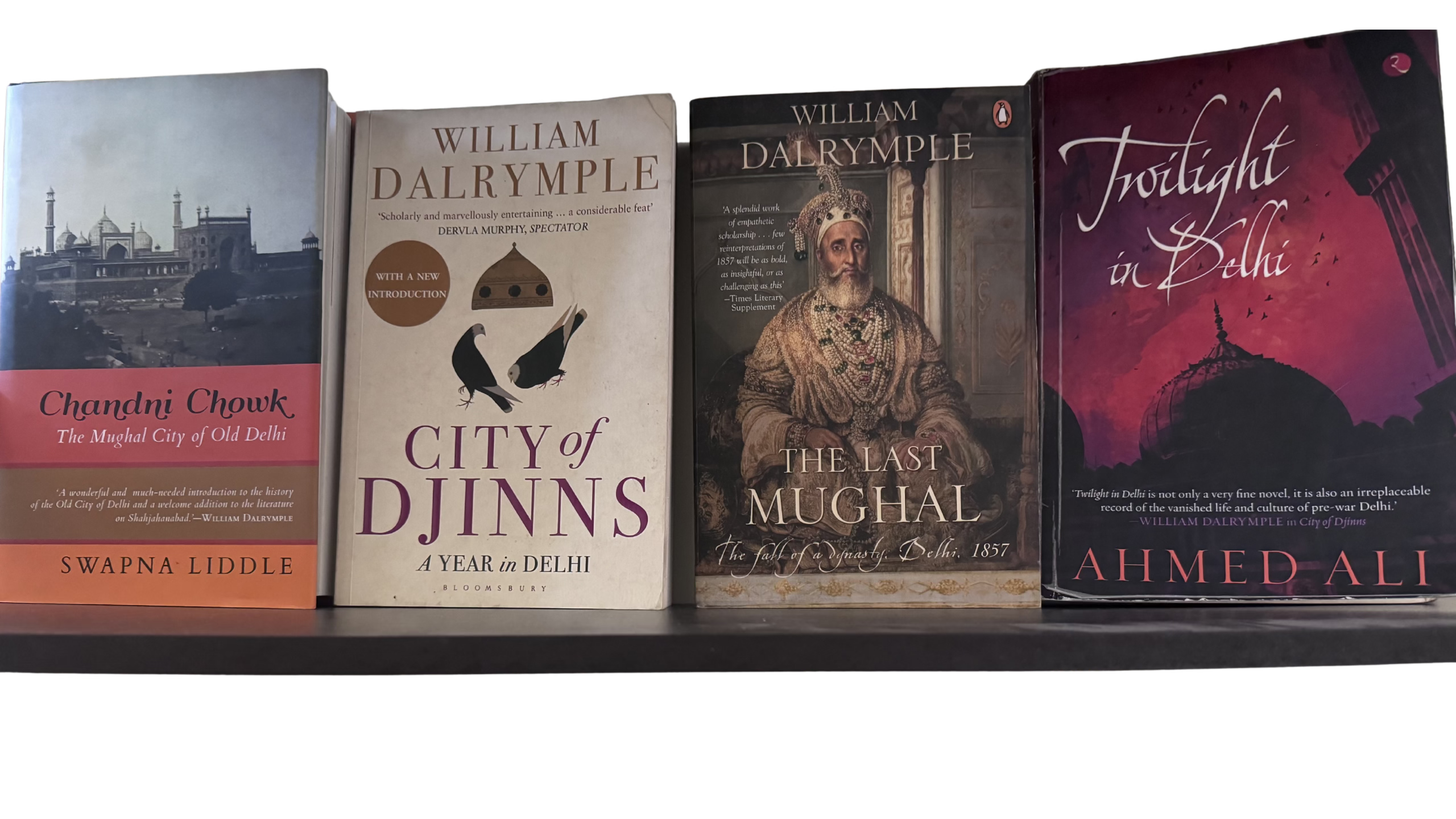
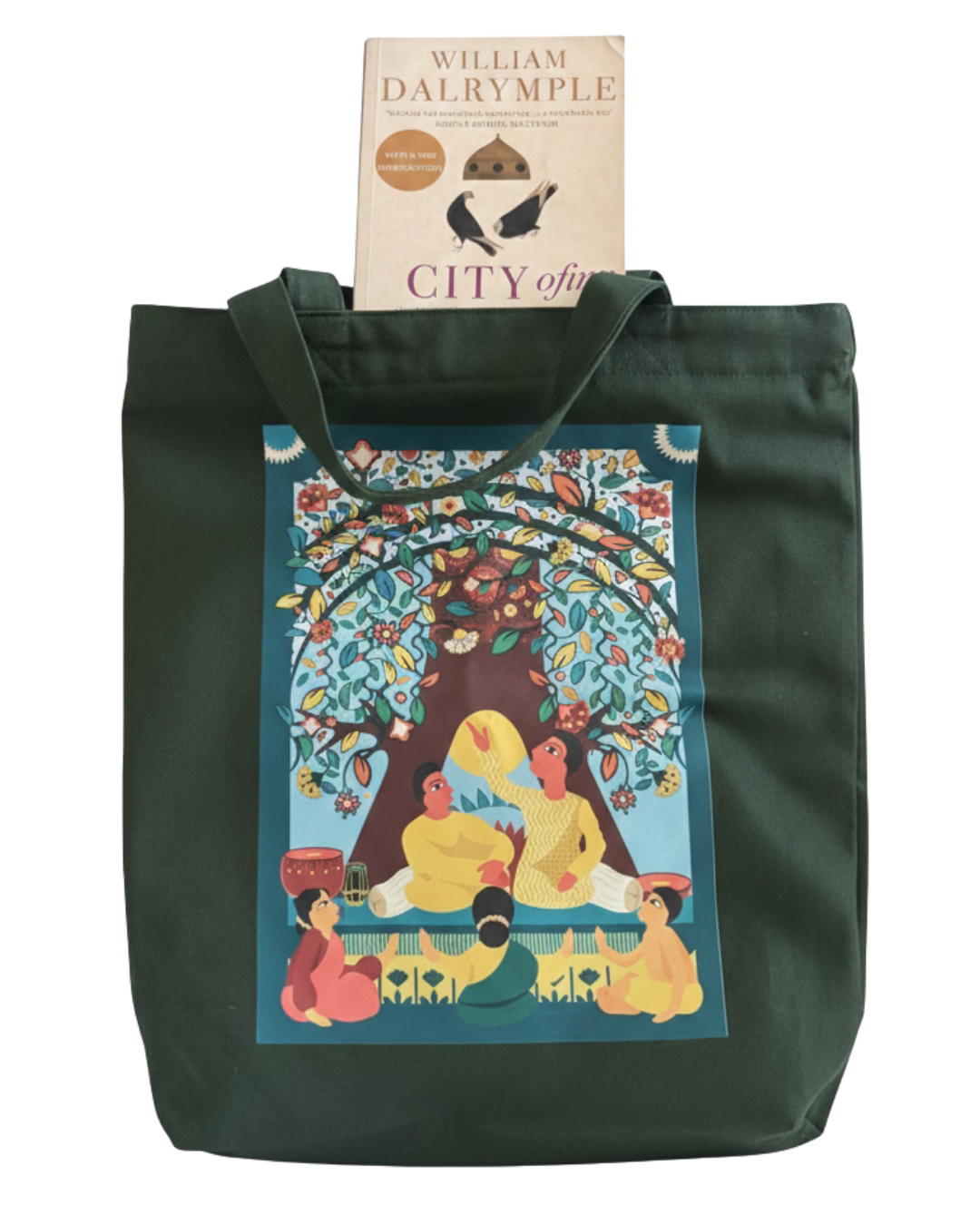
1. City of Djinns by William Dalrymple
When talking about books about Delhi, it has to begin with City of Djinns.
A wandering love letter to the city, this is perhaps one of William Dalrymple’s most popular works and one of my personal favourites. It is also among his earliest books, written at a time when he was deeply immersed in travel writing.
Dalrymple walks through centuries, moving across the many eras of Delhi with ease. If you walk through Chandni Chowk, you begin to see Shahjahanabad. If you pass by Nigambodh Ghat, it carries echoes of the Mahabharata.
Through conversations, ruins, and lived memories, he reveals a city that refuses to belong to just one time.
This is Delhi, layer upon layer of memory.
2. Delhi: A Novel by Khushwant Singh
This is not a polite portrait of the city. It is a passionate one, unmistakably in Khushwant Singh’s style. Bold, irreverent, and unapologetically raw, the book reads like an intense love affair between the author and Delhi. And like all enduring love stories, it is messy, sensual, complicated, and deeply personal.
Through the character of Bhagmati, Singh journeys across Delhi’s long and turbulent history, from the profound bond between Nizamuddin Auliya and Amir Khusrau to the brutal invasion of Nadir Shah.
For me, the most memorable passages are those about Mir (Mir Taqi Mir), one of the greatest poets of Delhi. In those moments, the novel softens and turns almost lyrical, reminding us that even in a city repeatedly scarred by conquest, poetry endures.
This is Delhi in all its excess and contradiction, flawed, wounded, and impossible not to love.

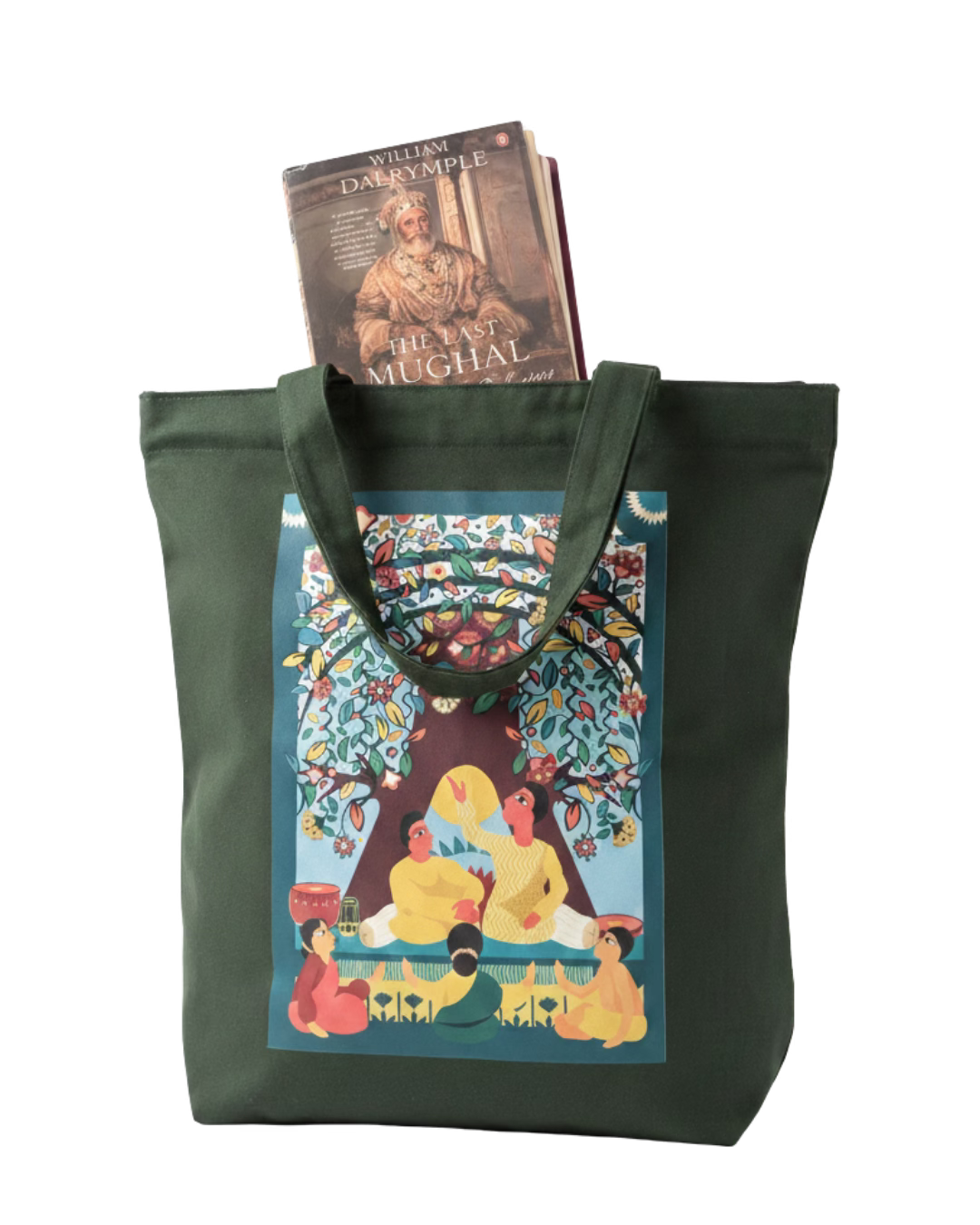
3. The Last Mughal by William Dalrymple
Delhi, in the past as much as in the present, has always been a centre of power. There is a reason power shapes the city’s imagination. Even when the British arrived, they could not resist its charm. Some began to live like Badshahs themselves. The era of the so-called “White Mughals” emerged from this fascination. David Ochterlony is one such example, embracing culture with ease.
To understand Delhi better is to understand 1857. The Last Mughal brings alive the fading grandeur of Bahadur Shah Zafar and the violent reshaping of the city during the Revolt. Through court records, letters, and forgotten voices, Dalrymple reconstructs a Delhi on the brink of irreversible change.
After reading this book, the Red Fort never looks the same. It no longer feels like a monument. It feels like the last sigh of a dying empire.
4. Twilight in Delhi by Ahmed Ali
A slow, aching elegy to a vanishing Old Delhi. Written with lyrical tenderness, it captures the life of a Muslim household as empire crumbles quietly beyond its doors. This is a Delhi that no longer exists, preserved only in memory, in language, and in longing.
Each section opens with a couplet by Ghalib or Mir, setting the emotional rhythm of the narrative. The poetry does not feel ornamental; it breathes through the story. You can almost hear the qawwals in the background, their voices rising and falling, carrying grief, devotion, and nostalgia into the prose itself.
I am writing this during Ramadan, and perhaps there is no more fitting time to read it.

5. Chandni Chowk: The Mughal City of Old Delhi by Swapna Liddle
A guided walk through one of the most storied markets in South Asia, this book invites you to slow down. It makes you pause at every haveli, every mosque, every narrow lane, reminding you that even chaos has design, and even noise has history.
I picked up this book deliberately for this article, and in reading it, I realised how much of Delhi I still do not know, like the practice of the Shah Jahan appearing at the jharoka each morning, a stone balcony projecting from the palace wall, to present himself before his people and symbolically display imperial power.
It is these fine details, about how Shahjahanabad, known today as Old Delhi, was planned, how its streets aligned, how its architecture spoke of authority and aesthetics, that make the book so compelling.